





Product Details
Composition
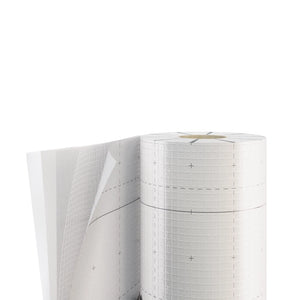
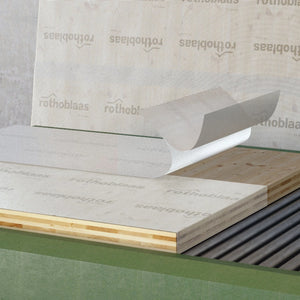
The top layer of this vapour barrier is a functional aluminised PE film. The middle layer consists of a PE reinforcement grid. The bottom layer is a PE film. The adhesive is a solvent-free acrylate dispersion. The separation layer is a pre-cut removable plastic film.
Performance
Water vapour transmission (Sd) = 4000 m (EN 1931 standard).
Thanks to its ability to reflect up to 70% of heat, the adhesive vapour control sheath improves the thermal performance of the construction panels.
The composition of this vapour barrier and the reinforcement grid guarantee excellent dimensional stability even under mechanical stresses.
Sealing
Maximum resistance to the passage of water vapour and radon gas thanks to its special composition; ideal in combination with TERRA BAND UV and ALU BUTYL BAND for the perfect sealing of joints on site. The membrane, tested according to ISO/TS 11665-13, protects the building's perimeter and foundation structures, while minimising the presence of radon and eliminating health risks.
Vapour barrier where it is put
This adhesive barrier is placed inside the walls, floor or roof of a building to reduce the transmission of moisture through the structure. Its main objective is to prevent moisture condensation inside the walls, which could cause structural damage and mould problems. The membrane is also used to prevent the passage of radon gas indoors and avoid its harmful effects on health.
The exact location of the vapour barrier may vary depending on the type of construction and project specifications, but in general, it is placed on the warm side of the structure. The warm side is closest to the interior spaces of the building, where a higher temperature is maintained than outside.
The underfloor vapour barrier generally serves to protect the screed from rising damp and condensation, and is therefore applied before the screed is constructed. In the case of foundation floors, it also offers protection against radon gas infiltration.
The vapour barrier on interior walls will be placed on the inner side of the wall, between the inner cladding (e.g. plaster or gypsum boards) and the outermost layer.
The roof vapour barrier will be placed on the inner side of the roof structure, under the insulation and close to the living spaces.
In addition, the vapour barrier must be placed so that it is continuous, avoiding cracks or breaks that could allow moisture to pass through. It is essential to follow the designer's instructions or manufacturer's specifications to ensure proper installation.
Composition
The top layer of this vapour barrier is a functional aluminised PE film. The middle layer consists of a PE reinforcement grid. The bottom layer is a PE film. The adhesive is a solvent-free acrylate dispersion. The separation layer is a pre-cut removable plastic film.
Performance
Water vapour transmission (Sd) = 4000 m (EN 1931 standard).
Thanks to its ability to reflect up to 70% of heat, the adhesive vapour control sheath improves the thermal performance of the construction panels.
The composition of this vapour barrier and the reinforcement grid guarantee excellent dimensional stability even under mechanical stresses.
Sealing
Maximum resistance to the passage of water vapour and radon gas thanks to its special composition; ideal in combination with TERRA BAND UV and ALU BUTYL BAND for the perfect sealing of joints on site. The membrane, tested according to ISO/TS 11665-13, protects the building's perimeter and foundation structures, while minimising the presence of radon and eliminating health risks.
Vapour barrier where it is put
This adhesive barrier is placed inside the walls, floor or roof of a building to reduce the transmission of moisture through the structure. Its main objective is to prevent moisture condensation inside the walls, which could cause structural damage and mould problems. The membrane is also used to prevent the passage of radon gas indoors and avoid its harmful effects on health.
The exact location of the vapour barrier may vary depending on the type of construction and project specifications, but in general, it is placed on the warm side of the structure. The warm side is closest to the interior spaces of the building, where a higher temperature is maintained than outside.
The underfloor vapour barrier generally serves to protect the screed from rising damp and condensation, and is therefore applied before the screed is constructed. In the case of foundation floors, it also offers protection against radon gas infiltration.
The vapour barrier on interior walls will be placed on the inner side of the wall, between the inner cladding (e.g. plaster or gypsum boards) and the outermost layer.
The roof vapour barrier will be placed on the inner side of the roof structure, under the insulation and close to the living spaces.
In addition, the vapour barrier must be placed so that it is continuous, avoiding cracks or breaks that could allow moisture to pass through. It is essential to follow the designer's instructions or manufacturer's specifications to ensure proper installation.
Composition
The top layer of this vapour barrier is a functional aluminised PE film. The middle layer consists of a PE reinforcement grid. The bottom layer is a PE film. The adhesive is a solvent-free acrylate dispersion. The separation layer is a pre-cut removable plastic film.
Performance
Water vapour transmission (Sd) = 4000 m (EN 1931 standard).
Thanks to its ability to reflect up to 70% of heat, the adhesive vapour control sheath improves the thermal performance of the construction panels.
The composition of this vapour barrier and the reinforcement grid guarantee excellent dimensional stability even under mechanical stresses.
Sealing
Maximum resistance to the passage of water vapour and radon gas thanks to its special composition; ideal in combination with TERRA BAND UV and ALU BUTYL BAND for the perfect sealing of joints on site. The membrane, tested according to ISO/TS 11665-13, protects the building's perimeter and foundation structures, while minimising the presence of radon and eliminating health risks.
Vapour barrier where it is put
This adhesive barrier is placed inside the walls, floor or roof of a building to reduce the transmission of moisture through the structure. Its main objective is to prevent moisture condensation inside the walls, which could cause structural damage and mould problems. The membrane is also used to prevent the passage of radon gas indoors and avoid its harmful effects on health.
The exact location of the vapour barrier may vary depending on the type of construction and project specifications, but in general, it is placed on the warm side of the structure. The warm side is closest to the interior spaces of the building, where a higher temperature is maintained than outside.
The underfloor vapour barrier generally serves to protect the screed from rising damp and condensation, and is therefore applied before the screed is constructed. In the case of foundation floors, it also offers protection against radon gas infiltration.
The vapour barrier on interior walls will be placed on the inner side of the wall, between the inner cladding (e.g. plaster or gypsum boards) and the outermost layer.
The roof vapour barrier will be placed on the inner side of the roof structure, under the insulation and close to the living spaces.
In addition, the vapour barrier must be placed so that it is continuous, avoiding cracks or breaks that could allow moisture to pass through. It is essential to follow the designer's instructions or manufacturer's specifications to ensure proper installation.
Datasheets, Guides & Documents
Techincal Datasheets (TDS)
ROTHOBLAAS Barrier ALU NET Adhesive 300 (Reflective Self-adhesive Vapour Control Membrane) (1.45m x 50m)

- Regular price
- £684.98 per item
- Unit Price
- £9.45 per m²
- Ex-Vat Price
- £570.82 per item
- Unit Price
- £7.87 per m²
- Regular price
-
- Sale price
- £684.98 per item
- Unit Price
- £9.45 per m²
- Regular price
-
£0.00Save £-570.82 - Ex-VAT Price
- £570.82 per item
- Unit Price
- £7.87 per m²
Product Code: SKU: RB/BANA300
MPN (Manufacturers Part Number): MPN: BARALUA300


